What's new

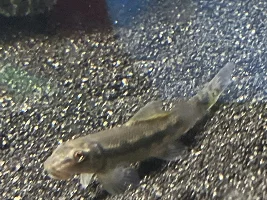
Microglanis sp.

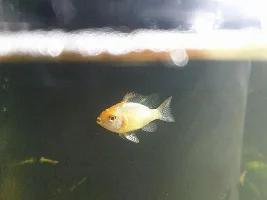
They are all clear, and after this week's water changes, they should be going into the main tank :D

They've even gotten much fatter
20250321_184726.webp


20250321_185016.webp
20250321_184940.webp
20250321_185006.webp


They like to wedge themselves behind the pump lol weird fish
20250321_191811.webp
 
They've entered the main tank, i doubt i shall see them often from now on 🤣
20250327_102351.webp
 
I ended up eventually buying the rest from the store, because the original batch the rest didnt sell by the time I went back. So now I have 8 of these chonkers.

The ladies are huge lol
20260325_214438.webp
20260319_201452(0).webp
20251125_195053(0).webp
20251125_195717(0).webp
20251125_195718.webp
20250803_203739(0).webp
20250803_203916.webp


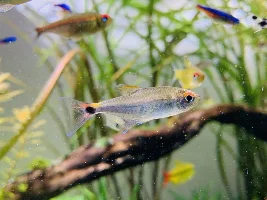
I love these goobers. They have hilariously overjoyed reactions to food time, but you dont usually see them until then. They wedge themselves into all of the wood in the tank
 
Cass this is not new. Here is a paper that might help.
Means of increasing the effectiveness of the treatment of ectoparasitic diseases in fish


And there is this which credits the identification of it in 1997.

Bauer, O.N. and Iunchis, O.N., 2001. A new genus of parasitic ciliata from tropical fishes. Parazitologiia, 35(2), pp.142-144.

Abstract​


Ichthyophthirius schlotfeldti Yunchis, 1997 (Ophryoglenidae) was described by the junior author from aquarium fishes from South-East Asia. In the present paper this species is separated into a new genus Neoichthyophthirius gen. n. The reproduction of this species takes place within the epithelium of fishes and not in water as in Ichthyophthirius multifilius. Neoichthyophthirius schlotfeldti has a ring-shaped macronucleus with ends overlapping. Maximum temperature, when the reproduction is possible, is about +34 degrees. The parasite is pathogenous and causes a mortality of aquarium fishes.
 

Most reactions

Back
Top